
Doubling Profit Margins in 2026: 4 Strategic AI Moves to Put Your Marketplace on Autopilot
GMV is growing, but OPEX is eating your net margin. In 2026, the winners won’t hire more people—they’ll automate marketplace operations end-to-end with AI. Here are four high-leverage moves to scale profit, not headcount.

Etrexio Team
Editorial Team

Your marketplace is working. GMV is up. Seller supply is growing. Buyer demand is there.
But when you face the economic reality of 2026, a frustrating equation shows up behind the scenes: as transactions increase, your support team expands, manual processes clog up, and operational costs (OPEX) start consuming your net profit.
The rule of growth has changed. The question is no longer “How many people should we hire?” It’s how fast you can put operations on autopilot with AI and tighten your unit economics until they’re unbeatable.
If your goal isn’t to “use cool tech” but to turn your marketplace into a high-margin machine, here are four AI moves you should integrate before 2026 ends.
 Semantic search is about intent—not keywords.
1) The 2026 Search Standard: Contextual Matching (Semantic Matchmaking)
Traditional search engines match keywords. But 2026 buyers—both consumers and B2B procurement teams—are now used to searching with ChatGPT-like speed and intent.
When a user types “something comfortable for the beach” or “a durable stainless steel bolt,” and you fail to surface great products simply because the exact words aren’t in the title, you lose the sale.
Business impact: If users can’t find what they want within seconds, they bounce. Perfect matchmaking is not a feature—it’s the bloodstream of your conversion engine.
AI move: Upgrade to a vector-based semantic search architecture. Instead of matching words, AI matches intent: it understands context, fixes messy phrasing, and returns the right products fast—lifting conversion rate immediately.
Implementation notes (what “good” looks like):
- Hybrid retrieval: semantic vectors + lexical signals (brand, SKU, exact match).
- Personalization: incorporate user behavior, category affinity, price sensitivity.
- Merchandising controls: boost margins, availability, seller quality, delivery speed.
- Continuous evaluation: offline relevance tests + online A/B conversion impact.
 Autonomous agents reduce cost per ticket while improving speed.
2) Break the Human Bottleneck: Autonomous AI Agents for Support & Disputes
In two-sided platforms, buyer–seller disputes are inevitable: shipping delays, return requests, “where is my order?” tickets, routine policy questions. As your marketplace scales, your contact center becomes one of your largest cost centers.
Business impact: Support cost quietly erodes your take rate. It’s one of the biggest hidden enemies of marketplace profitability.
AI move: Retire the old, frustrating chatbot era. Build RAG (Retrieval-Augmented Generation)–powered autonomous AI agents trained on your internal data: order events, tracking systems, seller policies, refund rules, SLA logic, and historical resolutions.
With 2026-grade agent workflows, AI can query shipment status in real time, interpret seller return policies, and resolve a large share of tickets end-to-end—often in seconds, without human escalation.
Implementation notes:
- Connect agents to tools (order management, logistics, payments, CRM) with strict permissions.
- Define resolution playbooks: what the agent can do, what requires approval, what must escalate.
- Use safe-guardrails: identity checks, refund caps, fraud flags, and audit logs.
- Measure outcomes: resolution time, deflection rate, CSAT, and cost per ticket.
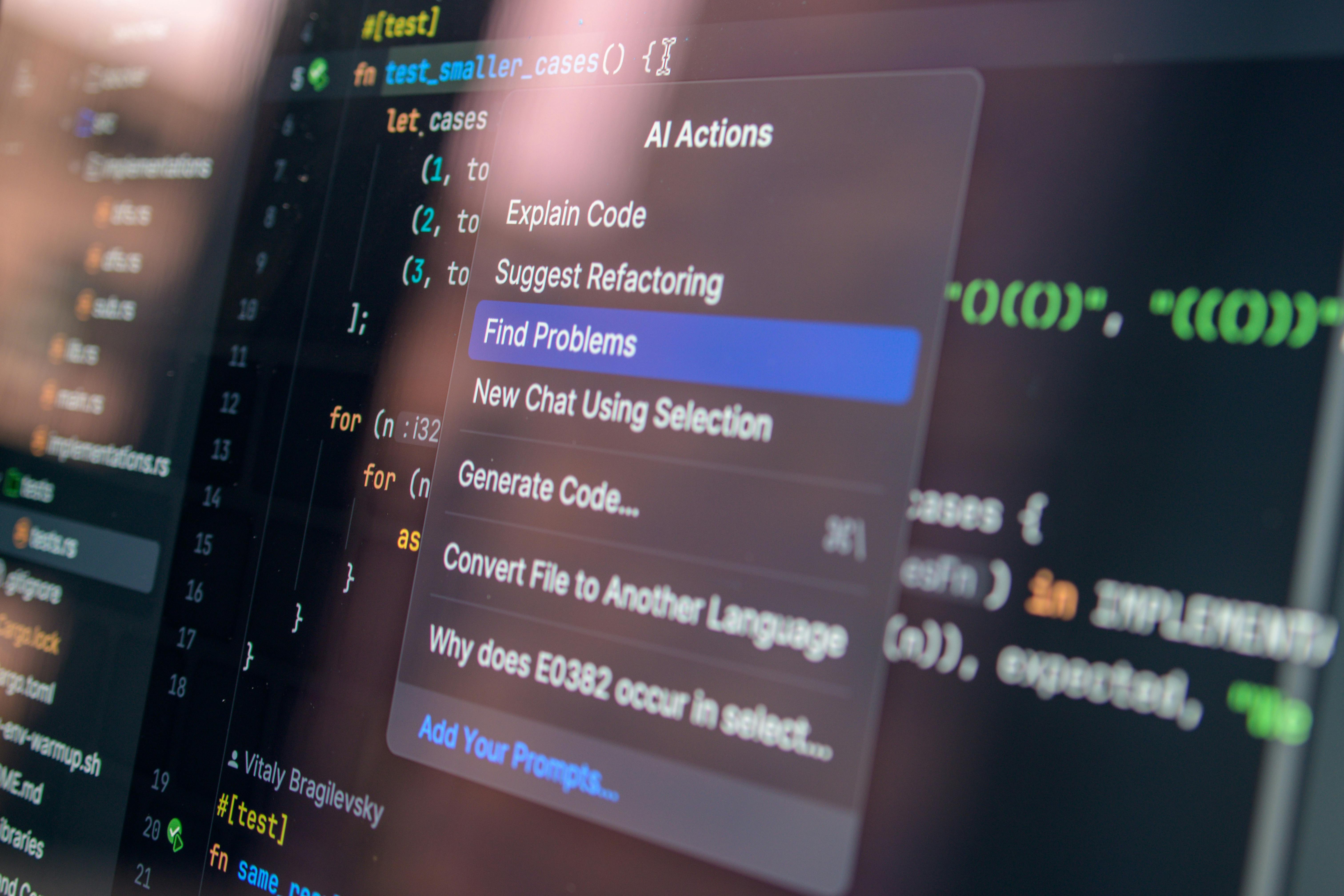 GenAI turns inconsistent seller listings into conversion-ready catalog pages.
3) Turn “Trash Inventory” into Revenue: GenAI for Catalog Optimization
One of the hardest parts of running a marketplace is that you don’t control your sellers. They upload dark photos, incomplete descriptions, inconsistent attributes, and SEO-poor titles. Scaling a manual content team to fix this is financial self-sabotage.
Business impact: Low-quality images and weak copy can crush a product’s conversion rate—while also weakening your organic search performance.
AI move: Plug Generative AI into your seller listing flow via API. When a seller uploads an amateur photo, AI can remove backgrounds, improve lighting, standardize aspect ratios, and generate studio-like visuals. At the same time, it can turn minimal seller inputs into persuasive, error-free, SEO-friendly product content.
Implementation notes:
- Image pipeline: enhancement, background cleanup, compliance checks, watermark detection.
- Text pipeline: title normalization, attribute extraction, bullet points, FAQs, translations.
- Governance: brand voice rules, prohibited claims, category-specific templates.
- Quality control: confidence scoring + human review only when needed.
 Leakage prevention is a mix of NLP intent detection and behavioral risk scoring.
4) Stop Off-Platform Leakage in Milliseconds: Behavioral Anomaly Detection
In services and wholesale marketplaces, disintermediation is a direct threat: sellers and buyers try to move transactions off-platform to avoid fees. Every leaked transaction is lost commission—and a hit to your valuation narrative.
Business impact: Leakage is revenue loss hiding in plain sight.
AI move: Instead of crude keyword bans, use NLP + behavioral anomaly detection. AI can detect intent even when users try to evade filters with spacing, misspellings, or coded language (“let’s talk on WA,” “I’ll invoice offline,” etc.).
Combine message-level intent detection with behavioral signals—sudden contact info sharing, unusual negotiation patterns, repeated cancellations—then trigger smart interventions: warnings, masked contact fields, delayed message delivery, or temporary holds.
Implementation notes:
- Model for intent, not words: classify “off-platform attempt” vs. benign conversation.
- Use risk scoring: content signals + user history + transaction context.
- Keep the UX clean: intervene only when confidence is high to avoid false positives.
- Create feedback loops: confirmed cases retrain the system.
Conclusion: Scale Your Algorithms—Not Your Headcount
It’s 2026. You can’t compete with traditional scaling anymore. If your GMV grows but your margin stays flat (or shrinks), you have friction in the system—usually powered by human labor and manual decision-making.
At Etrexio, we help marketplaces move from heavy, manual operations to self-driving, AI-native platforms that turn data into profit and deliver high-margin unit economics.
If you want to identify which processes in your marketplace can be put on autopilot with 2026 AI standards—and reduce operational cost while protecting revenue—schedule an Etrexio AI Architecture Check-Up.
Related Perspectives

3 Strategic Decisions to Scale Your B2B Marketplace from 100 to 10,000 Sellers (Without Your System Collapsing)
You’ve proven your MVP with the first 100 sellers. The next phase—1,000 to 10,000—will break brittle architectures. Here are three strategic decisions that protect performance, margins, and valuation as you scale.

5 Strategic UX Moves to Reduce Cart Abandonment in the US—and Spike Your GMV
CAC is rising, but GMV isn’t keeping up. In the US market, tiny UX friction sends users straight to Amazon, Faire, or eBay. Here are 5 strategic UX moves—search, seller onboarding, checkout, retention, and trust—that reduce cart abandonment and unlock scalable GMV growth.