01 A small job that was secretly an audition
The video player test
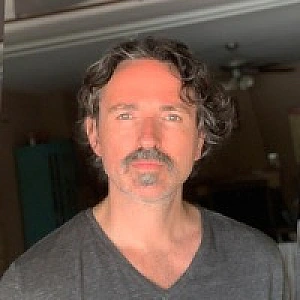
Bob Byrne has spent 15 years teaching languages, alphabets, and writing systems through video and mnemonics. He has also spent years watching development teams fail him. Before we met, he had commissioned three or four apps, and because no team could pull off the full vision, each app stayed locked to a single language. Video playback, the heart of his teaching method, was where teams kept stumbling.
He found ETREXIO on Upwork and gave us a deliberately small job: just a video player module. It worked so well that the very next day he called a meeting and laid out the real project, the one all his previous apps had been fumbling toward: Learn Languages with Dr. Moku, a single flagship uniting every language, every course, every feature. His signature product. In hindsight, every earlier project had been a rehearsal for that one.
02 The unification four teams could not deliver
One app, every language
We built the flagship as one Flutter app for iOS and Android, the stack we use for every mobile project, with every language living inside as its own course area and everything managed from a proper admin panel. Fifteen years of teaching material, previously scattered across single-language apps that different teams had built to different standards, finally came together in one product.
For Bob, the unification itself was a milestone he had chased for years. Every app he had ever commissioned was, in effect, auditioning for this one, and watching them finally merge into a single flagship made him, in his own words, happier than any single feature we shipped. He calls it the best app of his 15-year career.
The stack followed our house rules: web and backend work at ETREXIO generally runs on Laravel, and every mobile app we ship is Flutter, which is how one codebase serves both stores without splitting the budget in two.
- One Flutter app for iOS and Android covering Japanese, Korean, Chinese, and Arabic
- Every language as its own course area inside a single product
- Admin panel for course, content, and release management
- Fifteen years of teaching material unified in one place
03 Years of scar tissue, answered with one sentence
The tablet question
Midway through the collaboration Bob asked a question that carried years of disappointment: would it be impossible to make this work on tablets? Every previous attempt had ended in fiasco. Teams either failed at responsive design outright or broke the phone experience while stretching layouts to fit tablets, and he had learned to expect one or the other.
Our answer was simple: relax, and leave it to us. We designed every screen responsively across phones and tablets of every size from the start, rather than bolting tablet support on afterward. The years-long problem simply ended. Tablet users joined without the phone experience losing anything, and the user pool widened accordingly.
04 The feature that changed the economics
Offline, where learning actually happens
Then came offline mode, the feature that changed the numbers. Language learning is a spare-time activity. People want to study on the subway, on trains, and out in the world, and in exactly those places the signal is weak or mobile data feels too expensive to spend on lesson videos.
Offline mode resolved the whole dilemma: learners download their lessons at home on Wi-Fi and study wherever they like, connection or not. Sales rose 36 percent after it shipped. The lesson generalizes beyond language apps: when a product meets people in the moments they actually have, rather than the moments the roadmap assumed, the revenue follows.
05 Five years, one team, no reason to switch
The outcome
Today the app has taught Japanese, Korean, Chinese, and Arabic to more than 100,000 learners. Crash rates, always low in our builds, dropped further once StackWatch began monitoring the app continuously, and after those improvements ratings rose and store rankings climbed visibly across country stores, with signups and revenue climbing alongside them. We keep the product at its best with a steady rhythm of updates, improvements, and fixes, the way an in-house team would, which is exactly how Bob describes us: an in-house team that never quits and never slacks.
Bob was one of ETREXIO's first clients, from the days when we were closer to freelancers than a company. We promised him then that however large we grew, he would keep getting support at a price he could afford, and five years later we still keep that promise. We call it a loyalty project, and Bob a friend of the house. Either way, the man who once changed development teams with every project has not changed teams since he found us. Ask either side for the turning points of this relationship and the honest answer is that there are too many to count, but the simplest one is still the day all the old apps became one.